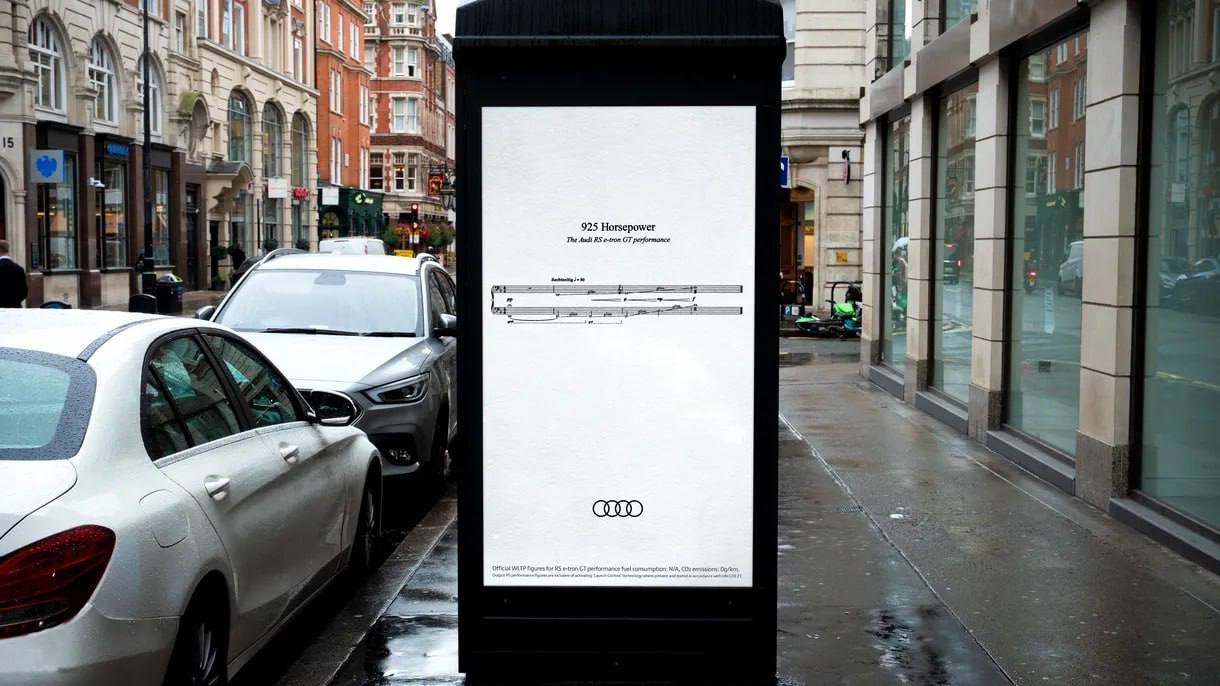
A fresh trend is gaining traction in the digital space - audio business cards - and Audi’s bold approach is a case study ripe for scaling. Why settle for showcasing speed and power with smoking tires, roaring tracks, or slow-motion lions when you can… play it?
What Audi Did
The brand teamed up with composer Ben Parry to transform the growl of the RS e-tron GT engine into a musical score. Instead of flaunting stats like “925 hp” on billboards and print ads, Audi features sheet music. It’s not about the car or the road - it’s about the music.
Why This Works in Marketing
Sensory Shift: We’re used to “watching” car ads. Audi invites us to “listen,” creating a surprise factor that sets it apart in a crowded advertising landscape.
High-Culture Association: Notes evoke classical music, signaling status, intelligence, and sophistication—attributes that resonate more in the premium segment than aggressive, “masculine” campaigns.
Symbolic Economy (à la Bourdieu): Buying an Audi becomes more than a purchase—it’s an “aesthetic experience,” positioning the car as a work of art.
Cognitive Transfer Effect: Power is encoded not in dry specs but in a musical score, prompting deeper, more emotional engagement from the brain.
What Small Brands Can Take Away
Unconventional Sensory Metaphors: If you’re a coffee brand, skip the steam rising from a cup—try a color palette that “smells” like espresso.
Leverage Cultural Capital: Partner with artists, musicians, or architects to elevate your product’s perceived value beyond its utility.
Use Allegory Over Directness: Instead of “our sofa can handle anything,” collaborate with circus acrobats performing stunts on it for a striking visual metaphor.
This innovative trend is poised to inspire marketers worldwide to rethink how they connect with audiences.