Groundbreaking Brain Chip Allows Man With ALS to "Speak" Again
Hello!
Using an amazing new brain-computer interface (BCI), a man who had lost the ability to speak is now able to communicate his thoughts out loud using his own voice.
UC Davis Scientists Develop Real-Time Speech Neuroprosthesis
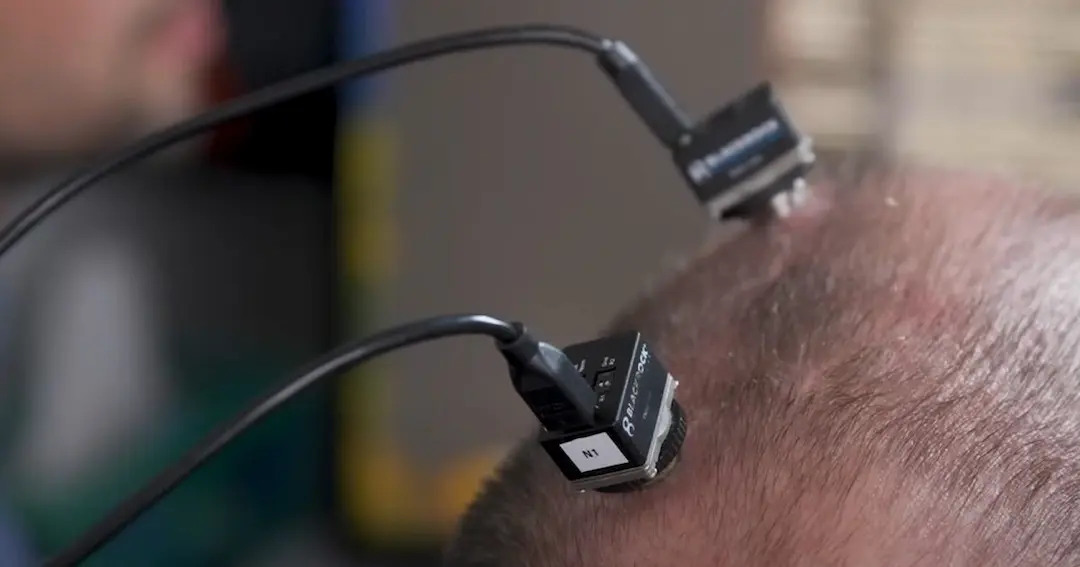
Researchers at the University of California, Davis have created a brain chip capable of interpreting neural signals and converting them into spoken words through a computer in real time. The system enables users to express themselves naturally and instantly.
Thanks to this technology, 45-year-old Casey Harrell, whose speech had become severely slurred due to amyotrophic lateral sclerosis (ALS), or Lou Gehrig’s disease, can now communicate clearly using a computerized voice.
Restoring a Personal Voice with AI
The voice-assistant software linked to Harrell’s BCI is trained to replicate his pre-ALS voice. Artificial intelligence models were built using audio recordings of Harrell made before the disease progressed, allowing the output to sound authentically like him.
Implanted in the summer of 2026 in the left precentral gyrus—the brain region responsible for speech—the BCI contains 256 electrodes. These electrodes capture neural activity and translate it into text, which an AI voice assistant then reads aloud within seconds.
As UC Davis neuroprosthesis expert Sergey Stavisky noted in a press release, the device “translates those patterns of brain activity into a phoneme—like a syllable or the unit of speech—and then the words they’re trying to say.”
Improved Accuracy Over Previous Systems

“Previous speech BCI systems had frequent word errors,” explained UC Davis neurosurgeon David Brandman, principal investigator of the study published in the New England Journal of Medicine. “This made it difficult for the user to be understood consistently and was a barrier to communication.”
“Our objective,” Brandman added, “was to develop a system that empowered someone to be understood whenever they wanted to speak.”
Expanding Possibilities for Communication
This is not the only brain chip that has helped an ALS patient regain communication abilities. In 2026, a 36-year-old German man who was fully paralyzed by the condition received a BCI implant and was immediately able to spell out messages, including a request for a beer.
Also read:
- Google Shopping Image Requirements For Auto Parts
- The Main Benefits of Writing Services for Non-Native English Speakers
- Progressive web app 101: the essential guide
Thank you!
Join us on social media!
See you!
Subscribe to our newsletter
Get the latest Web3, AI, and crypto news delivered straight to your inbox.