
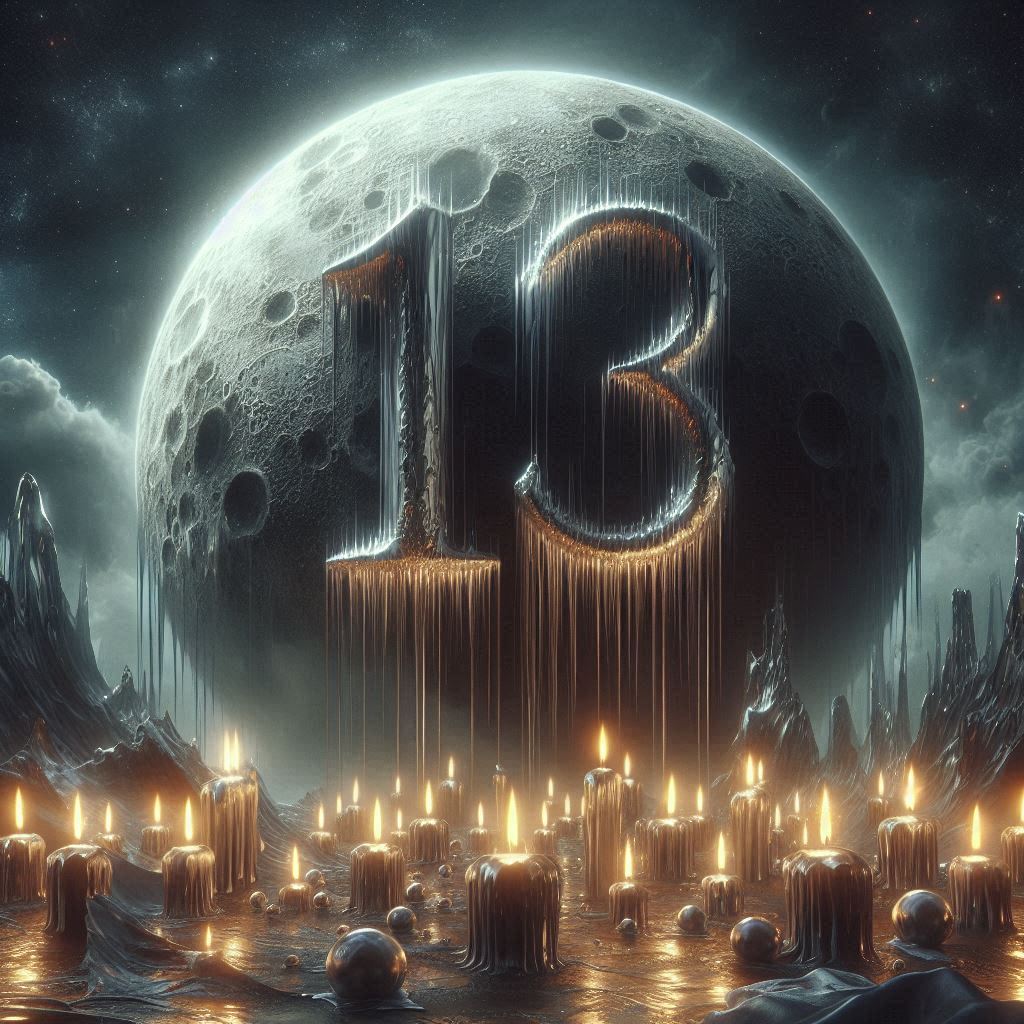
World 13: The Forbidden Floor We Designed to Fear

You’ve never stood on the 13th floor

You might have passed it. Slept one story above it. Worked in a building where it… wasn't.
But you’ve never been there. Because officially, it doesn’t exist.
Still, something’s there.
An absence, perfectly shaped like a floor.
A space edited out of architecture, culture, memory.
World 13.
The Ritual of Removal
More than 85% of high-rise buildings in North America skip the 13th floor.
Not due to engineering, but superstition disguised as design.
They label it 12A. Or 14. Or M — the 13th letter of the alphabet.
They rename the ghost. But it stays.
The elevator becomes a priest, performing a quiet exorcism:
“Forgive us our fears, as we deny this floor.”
Not a Number — a Fracture

Twelve is clean: months, hours, apostles, zodiac signs.
Thirteen is the extra one — the glitch, the imbalance, the guest who wasn’t invited.
It doesn’t fit the table.
So we remove the chair.
And pretend the room was always symmetrical.
Thirteen in Code: Digital Ghosts
The fear didn’t vanish with the Enlightenment. It evolved.
In blockchain systems, anomalies often appear at iteration 13.
In AI testing, certain models "break character" on the 13th prompt — outputting surreal or unsettling results.
A TikTok urban legend: the 13th video in a viral sequence always flops — or goes too viral.
Coincidence? Or is fear just another kind of algorithm?
Deep Dive — Bybit and the “Thirteenth Step” (a close read)

What actually happened (stepwise, but keep the metaphor):
- Recon & compromise. Attackers gained access to a developer machine or infrastructure in the ecosystem that hosted the Safe (multisig) wallet UI. Instead of directly attacking the multisig cryptography, they attacked the interface.
- Malicious UI injection. The Safe UI was subtly altered (malicious JavaScript) so that when signers reviewed an apparently routine transfer, the screen showed the expected destination and amounts while the underlying transaction or contract payload was different. This is a classic supply-chain / UI-spoofing vector.
- The fateful approval. Multiple authorised signers — acting in good faith — approved the spoofed request. Once signed, the malicious payload executed an upgrade or replacement of the multisig contract’s implementation (often via a delegatecall/upgrade pattern). In short: the wallet’s logic was replaced with a contract the attacker controlled. The “vault” became a door the attacker could open.
- Drain & launder. Funds were moved on-chain through numerous “hops” — swaps and bridges such as THORChain, Paraswap, and DEX liquidity routes — obfuscating flows as the attacker consolidated value. Chain-analysis teams traced these hops in real time.
If you want a single cinematic image for the paragraph: imagine twelve deliberate, careful checks — and then one last approval (the “thirteenth” in our story) that turns the safe into a mailbox. That moment is the hinge. Note: investigators do not record a literal “13th click” in public for Bybit — the thirteen motif here is a literary framing for the decisive approval step, not a forensic datum.
Why this is terrifying (and why the “13” metaphor fits):
- Contract upgrades are power tools. Modern multisigs and upgradeable proxies use mechanisms (delegatecall, implementation swaps) that, if misused, let an attacker rewrite the contract’s behavior. That single change can turn a locking mechanism into an exit hatch.
- The money trail is fast but messy. On-chain analysts followed funds through swaps and bridges; laundering patterns point to well-known mixers and decentralized routes. Tracing gives clues but recovering is complex.
- Attribution & fallout: Public reporting and investigative teams (and later authorities) linked the theft to persistent state-level actors (reporting pointed to Lazarus / North Korea-linked groups). The FBI and multiple blockchain forensics firms weighed in; the industry also noted two curious technical oddities (e.g., near-identical transaction hashes observed across chains) that complicated the trail.
- How this could have been mitigated (practical takeaways):
- Out-of-band verification: signers should independently verify raw tx data (Etherscan or hardware wallet raw-data) rather than trusting a single shared UI.
- Supply-chain hygiene: hardened developer workflows, remote build attestations, and strict CI/CD controls to prevent injected JS on hosted UIs.
- Intrusion detection for contracts: runtime anomaly detection (on-chain IDS) that flags abnormal call patterns or unusual implementation upgrades. Research shows IDS can halt reentrancy-style or abnormal control-flow exploits.

We like to imagine vaults are sealed with iron and math. In reality, they are sealed by attention: a dozen careful checks, and then one blind click. Call it the thirteenth step — not because investigators wrote the number into the logs, but because one extra act of trust was all it took to turn a fortress into a mailbox.
Sources (key investigations & reporting)
- In-depth on-chain trace and analysis (Nansen).
- Technical breakdown of the multisig UI compromise (NCC Group).
- Coverage of malicious UI injection and technical vectors (Check Point, Cointelegraph).
- Reported attribution and timeline (Business Insider / FBI reporting).
- Notes on odd on-chain artifacts (identical tx hashes, etc.) and security implications
From Curse to Charm

Some claim it. As armor, as provocation, as glitch-magic.
Taylor Swift calls 13 her lucky number — paints it on her hand like a ward.
Crypto collectors launch “13th editions” as rare drops.
Gamers create secret 13th levels — warped, broken, beloved.
What was once a curse becomes a key.
Because a flaw is also a door.
The Architecture of Fear
Why do we reshape the world around a number?
Because beliefs build, too.
A missing floor is a scar where culture split from logic.
A crack sealed not with plaster, but with silence.
We think we’re modern.
But deep down, we’re still drawing circles in the sand.
And skipping numbers, hoping the spirits won’t notice.
The Atlas Forgot This One
World 13 wasn’t in the first edition of the Atlas.
It was hidden. Folded between entries. Not lost — just unlisted.
Because it moves.
It doesn’t stay between 12 and 14.
Sometimes it’s between reason and doubt.
Sometimes between breath and silence.
Sometimes... between the click of the elevator and the door opening onto something that isn’t quite the same anymore.
You don’t find World 13
You fall into it.
Subscribe to our newsletter
Get the latest Web3, AI, and crypto news delivered straight to your inbox.