What are Different Types of SEO?
Hello!
Depending on your company’s goals, you can select the SEO approaches that deliver the most value. Below we explore the main types of search engine optimization, when each works best, and how to apply them effectively.
What is SEO?

For example, when someone searches for “where to buy hiking boots,” a retailer that sells this footwear can optimize its site to appear on the search engine results page (SERP).
What are the different types of SEO?
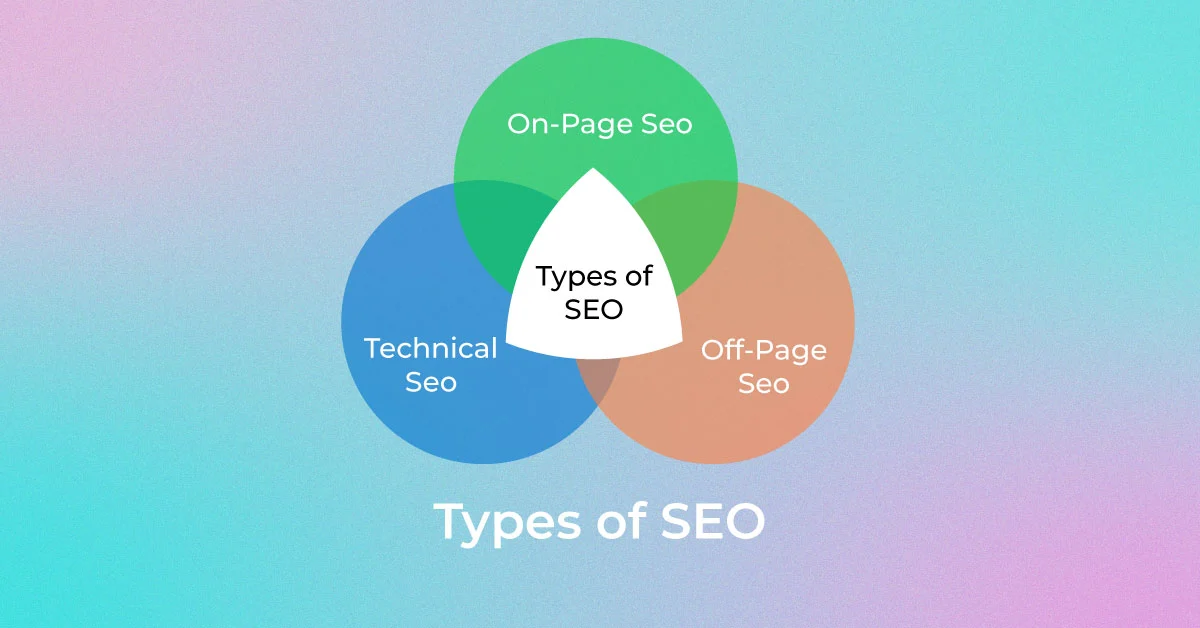
SEO encompasses several distinct strategies. The primary types include:
- On-page SEO
- Off-page SEO
- Technical SEO
- Local SEO
- Enterprise SEO
Let’s examine each of these SEO approaches in detail.
1. On-Page SEO
On-page SEO covers all the elements you can directly control on your website. By optimizing these factors, you help search engines understand your content and match it with relevant user queries.

- URLs — Each page URL should be concise, descriptive, and contain the target keyword.
- Title tags — Titles must clearly describe the page while incorporating keywords and encouraging clicks.
- Meta descriptions — These short summaries (up to 160 characters) appear below the title in search results and should highlight the page’s value.
- Alt tags — Alt text helps search engines and users understand the content of images.
- Heading tags — Proper heading structure organizes content and provides additional opportunities to include relevant keywords.
- Internal links — Thoughtful internal linking improves navigation, distributes authority, and helps search engines discover new pages.
- Content — High-quality, valuable content that satisfies user intent and naturally incorporates keywords, multimedia, and clear formatting.
- Navigation — Intuitive menus and site structure keep visitors engaged and reduce bounce rates.
- Design — A modern, professional design enhances user experience and supports better rankings.
Practical on-page SEO tactics include creating content that answers customer questions, placing keywords in URLs and headings, simplifying navigation, and refining the visual design for better engagement.

2. Off-page SEO
Off-page SEO focuses on signals outside your website that influence its authority. The most important factor is acquiring high-quality backlinks from reputable sites.

- Natural links — Earned when other sites discover and link to your content organically.
- Built links — Obtained through outreach, guest posting, or content promotion.
- Created links — Manually placed in directories or press releases; this approach carries higher risk and is generally discouraged.
Effective off-page strategies center on producing link-worthy content such as guides and infographics, building relationships with relevant bloggers, and amplifying content across social channels.
3. Technical SEO
Technical SEO ensures that search engines can efficiently crawl, index, and understand your website while delivering an excellent user experience. It forms the foundation that allows other SEO efforts to succeed.

- Improving page speed — Faster loading times enhance user experience and serve as a ranking factor. Techniques include image compression, browser caching, and code optimization.
- Updating robots.txt — This file guides crawlers on which pages to index or exclude.
- Creating an XML sitemap — Helps search engines discover and index all important pages quickly.
- Managing duplicate content — Use canonical tags and 301 redirects to indicate preferred versions of pages.
- Implementing responsive design — Ensures the site displays correctly across all devices.
4. Local SEO
Local SEO optimizes your online presence for location-based searches, helping your business appear in results that include phrases such as “near me” or specific city and neighborhood names.

Core local SEO actions include keeping your Google Business Profile complete and up to date, creating location-specific content, and encouraging and responding to customer reviews.
5. Enterprise SEO
Enterprise SEO applies the same core principles as standard SEO but at a much larger scale, tailored to the needs of major websites with extensive content and high competition.
The primary difference lies in the focus on short-tail, high-volume keywords. While long-tail phrases are easier to rank for, successful enterprise programs systematically target competitive short-tail terms once foundational rankings are established.

These five types of SEO form the essential toolkit every business should consider in 2026.
Thank you!
Join us on social media!
See you!
Subscribe to our newsletter
Get the latest Web3, AI, and crypto news delivered straight to your inbox.