What Is Generative AI? Concept, Capabilities, & Applications

Hello!
The field of AI has grown tremendously in recent years. In today’s fast-paced digital era, demand for artificial intelligence continues to accelerate. AI-powered solutions are now integrated into nearly every aspect of modern life. Among the most discussed trends is Generative AI, which remains one of the leading areas of innovation.
Generative AI Explained

A prominent example is ChatGPT Plus, which leverages the GPT-3 architecture and its enhanced versions to generate fast, accurate, and contextually appropriate information. For instance, users can prompt ChatGPT to write a poem about space for a five-year-old child. Many other creative and practical applications are possible — a demonstration video is linked below.
Conceptual Overview: Past, Present, and 2026

In 2026, engineers and data scientists continue to develop sophisticated AI systems that drive business efficiency and economic growth. Leading models such as DALL-E 2, Whisper, and GPT-3 exemplify the capabilities available today.
Based on ongoing advancements, the trajectory of generative AI points toward even more powerful innovations. The evolution of the technology remains dynamic, with new iterations and applications emerging steadily.
Capabilities Of Generative Artificial Intelligence

Examples include Google’s BERT and LaMDA, Meta’s OPT-175B (BlenderBot), and Microsoft’s OpenAI offerings: GPT-3, DALL-E 2, and Whisper. These models are trained extensively to deliver accurate text translation, natural conversation, and high-quality image generation.
ChatGPT, built on the GPT-3 and GPT-3.5 architectures, can produce poems, emails, jokes, and virtually any other form of written content requested by users.
Applications Of Generative AI
Generative AI is being applied across multiple industries. Below are some of the most notable use cases.
Gaming

Translation from/to images
Text-to-image models have become widely accessible. Tools such as DeepAI and DALL-E allow users to generate images from short textual descriptions. These systems analyze input and synthesize visuals by drawing on billions of parameters within their trained models.
Sound generation
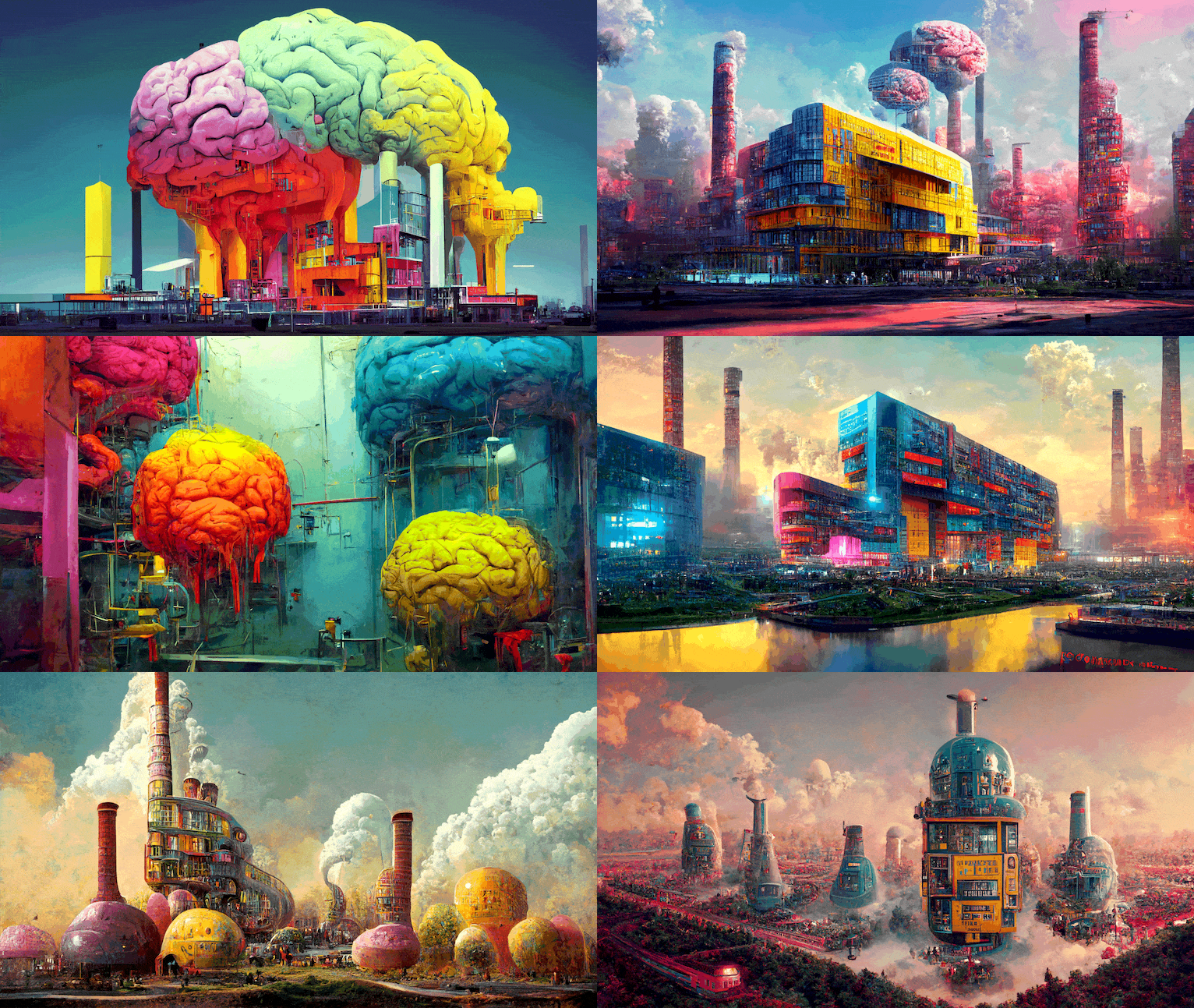 Generative AI is also used for audio creation. Models can synthesize new soundtracks or modify existing audio, such as altering the style of a karaoke track or changing the musical genre of a recording.
Additional applications include the generation of synthetic data, video content, and digital artwork.
Also read:
- 3 Tips to Build Deep Tech Startups across Borders
- Things to Prioritize Before Starting Up to clothing business
- Top 10 React Bootstrap Themes
Final Verdict
Generative AI continues to demonstrate strong performance, with current innovations serving as clear evidence of its potential. The evolution of AI is ongoing, and its impact is being felt globally.
Thank you!
Join us on social media!
See you!
Subscribe to our newsletter
Get the latest Web3, AI, and crypto news delivered straight to your inbox.