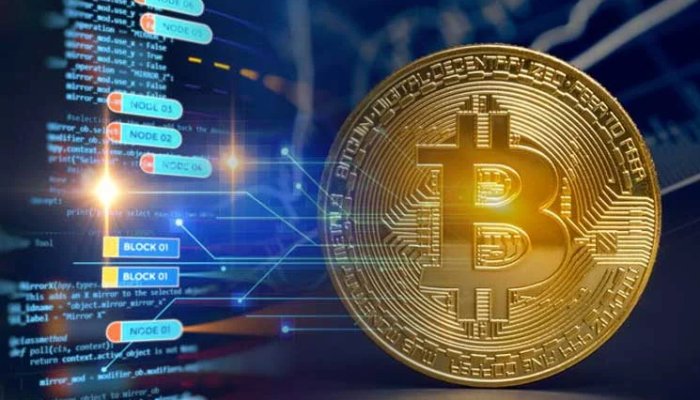
Bitcoin mining refers to the process of digitally attaching new transaction records to the blockchain, thereby securing and verifying the history of every Bitcoin transaction. This computational work is often described as “creating new bitcoin,” though in reality it rewards miners for maintaining the network’s integrity. The significant computing power required for this record-keeping phase has always been a central challenge.
Miners worldwide connect through a peer-to-peer network, each contributing to the system’s security and reliability.
Basics of Bitcoin Mining
Purchase them on an exchange
Mine new Bitcoin
The mining process is analogous to traditional resource extraction: just as prospectors sift through earth in search of valuable minerals, Bitcoin miners deploy specialized hardware to solve complex mathematical problems in pursuit of newly minted coins.
Bitcoin’s underlying technology is the blockchain—a distributed ledger that records every transaction in a transparent and immutable way. Each block contains a batch of transactions along with a cryptographic link to the previous block, forming a continuous chain.
How Mining Secures the Network
Miners compete to solve intricate cryptographic puzzles. The first to find a valid solution adds the new block to the blockchain and receives a reward—currently 12.5 BTC per block. This mechanism not only issues new coins but also protects the network against fraud by making it computationally expensive to alter past records.
10 Minutes Per Block
Satoshi Nakamoto designed the Bitcoin protocol so that a new block is created approximately every ten minutes. To maintain this consistent interval, the network automatically adjusts the mining difficulty every 2016 blocks.
When more miners join and total hash rate rises, difficulty increases, making puzzles harder to solve. Conversely, if mining participation drops, difficulty decreases, ensuring steady block production regardless of network conditions.
Evolution of Mining
In the early years, enthusiasts could mine Bitcoin using ordinary CPUs. As adoption grew, miners shifted to GPUs and later to highly efficient ASIC devices purpose-built for SHA-256 calculations. Today, profitable operations require optimized hardware that balances performance with energy efficiency.
Because electricity constitutes the largest ongoing expense, miners seek locations with low-cost power. Profitability hinges on keeping energy costs between roughly $0.03 and $0.08 per kWh.
Why Mine Bitcoin?
Bitcoin’s blockchain offers a decentralized monetary system free from central control. For many participants, mining is not only a way to acquire new coins but also a means of supporting a censorship-resistant financial network.
Key factors to evaluate before mining include:
Computing Hardware: Modern ASIC miners, costing around $1,500 each, deliver the necessary hash rate while remaining energy-efficient.
Power Costs: Electricity is the dominant operational expense; even small fluctuations in rates can determine whether an operation remains profitable.