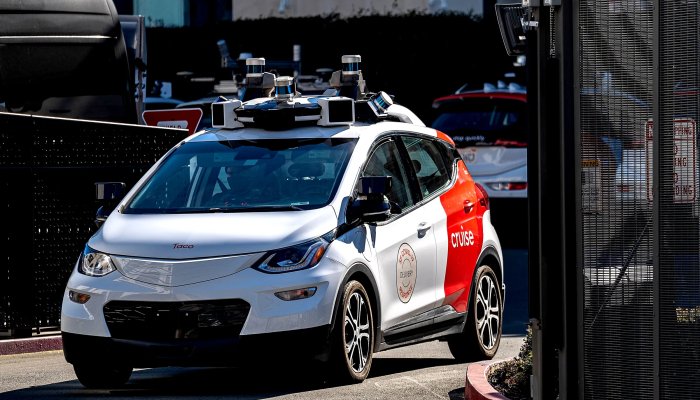
Chinese Company Approved to Test Robotaxis in California
|Creator Economy| 1529

The widely shared video of a Waymo passenger holding a small dog while people vandalized the robotaxi was recorded in 2024, not 2026. The San Francisco Standard’s contemporary account dates the scene to September 21, 2024, and places it within three separate incidents in the city’s Mission District.
The substantive update is that the passenger-security issue visible in that historical clip has not disappeared. A July 2026 San Francisco Chronicle investigation documents a separate May 9 attack in which an obstructed Waymo remained stationary while two people struck the occupied vehicle.
The dog-clutching passenger appeared in one episode of a short vandalism spree, not a newly reported event or a standalone encounter. The first two vehicles were targeted on Mission Street between 17th and 18th streets, while the final incident occurred later near 16th and Shotwell streets.
Masked people surrounded the cars, marked their exteriors and recorded the activity on mobile phones. In the clip that circulated most widely, a passenger remained in the front seat holding a small dog while the group worked around the vehicle.
The images establish that the car was occupied and being vandalized, but they reveal little about the passenger’s state of mind. A composed posture cannot establish whether the rider felt safe, understood the group’s intentions or consented to becoming part of a viral spectacle.
The verified date is important because the footage contains no conspicuous marker separating it from a current event. When an old clip returns without its location and year, viewers can easily mistake renewed circulation for a new attack.
The video compresses several tensions into one immediately legible image: an apparently calm passenger, a small dog, a driverless car and a group vandalizing the vehicle while filming themselves. That contrast lets a security incident circulate as absurd entertainment even after the surrounding chronology has fallen away.
Short reposts also shift attention toward the passenger’s expression and away from the constraints of the vehicle. There is no human driver inside to confront the group, select an improvised escape path or explain why the car has stopped. The rider becomes the only visible person associated with the robotaxi despite having no control over its driving system.
For publishers and creators recirculating the footage, an accurate caption needs to preserve three facts: the Mission District location, the September 21, 2024 date and the connection to three vandalized Waymo vehicles. Descriptions of the passenger’s emotions, the dog’s breed or the vandals’ motives should be avoided unless supported by additional evidence.
The 2026 case involved rider Sherman Watson in San Francisco’s Marina District at about 3:30 a.m. A person grabbed the Waymo’s front bumper and caused it to stop; a second person then joined the attack, and the vehicle’s windshield and other glass were struck while Watson remained inside. A remote assistant detected that the car was not moving and contacted police, whose officers reached the intersection at 3:46 a.m.
The robotaxi did not drive away while the obstruction remained in front of it. Watson depended on the cabin’s communication system, his own phone and the arrival of emergency responders as the attack continued outside.
The incident record initially identified Waymo and the damaged vehicle as victims of malicious mischief, with Watson listed as a witness. He was not recorded as injured during the initial interaction with officers, although the available process allowed him to supplement the record if he considered himself injured or threatened.
This attack was separate from the dog video and considerably more violent. The relevant connection is specific: deliberate human obstruction can prevent a cautious autonomous vehicle from moving, leaving its occupant reliant on remote support and public emergency services.
Waymo’s current personal-security instructions direct a threatened passenger to call 911 immediately from a personal phone. Riders can also call 911 through the Waymo app, request immediate help and lock the doors from the passenger screen, while the vehicle may remain stationary until police arrive and may address bystanders through an external speaker.
That stationary-vehicle warning defines the practical limitation more clearly than either viral clip can. Contact with Support or emergency services does not guarantee that the robotaxi can immediately maneuver around a person or object blocking its route.
Door locks can provide a barrier against unauthorized entry, but they do not remove the passenger from the threatening environment. In an emergency, the automated driving system’s caution may protect people outside the vehicle while prolonging the rider’s exposure inside it.
The original clip belongs to a specific moment in San Francisco in 2024 and should not be presented as a 2026 event. Its continued relevance comes from the later evidence, not from pretending the footage is new.
The 2026 attack supplies that evidence without making the two incidents equivalent. Together, they illustrate a persistent passenger-security constraint: when people deliberately surround or physically obstruct a robotaxi, its occupant may have communications and locked doors but no immediate means of making the vehicle leave.
Also read:


Get the latest Web3, AI, and crypto news delivered straight to your inbox.