Inverter Battery Price Is Only Half the Story—Capacity Decides Backup
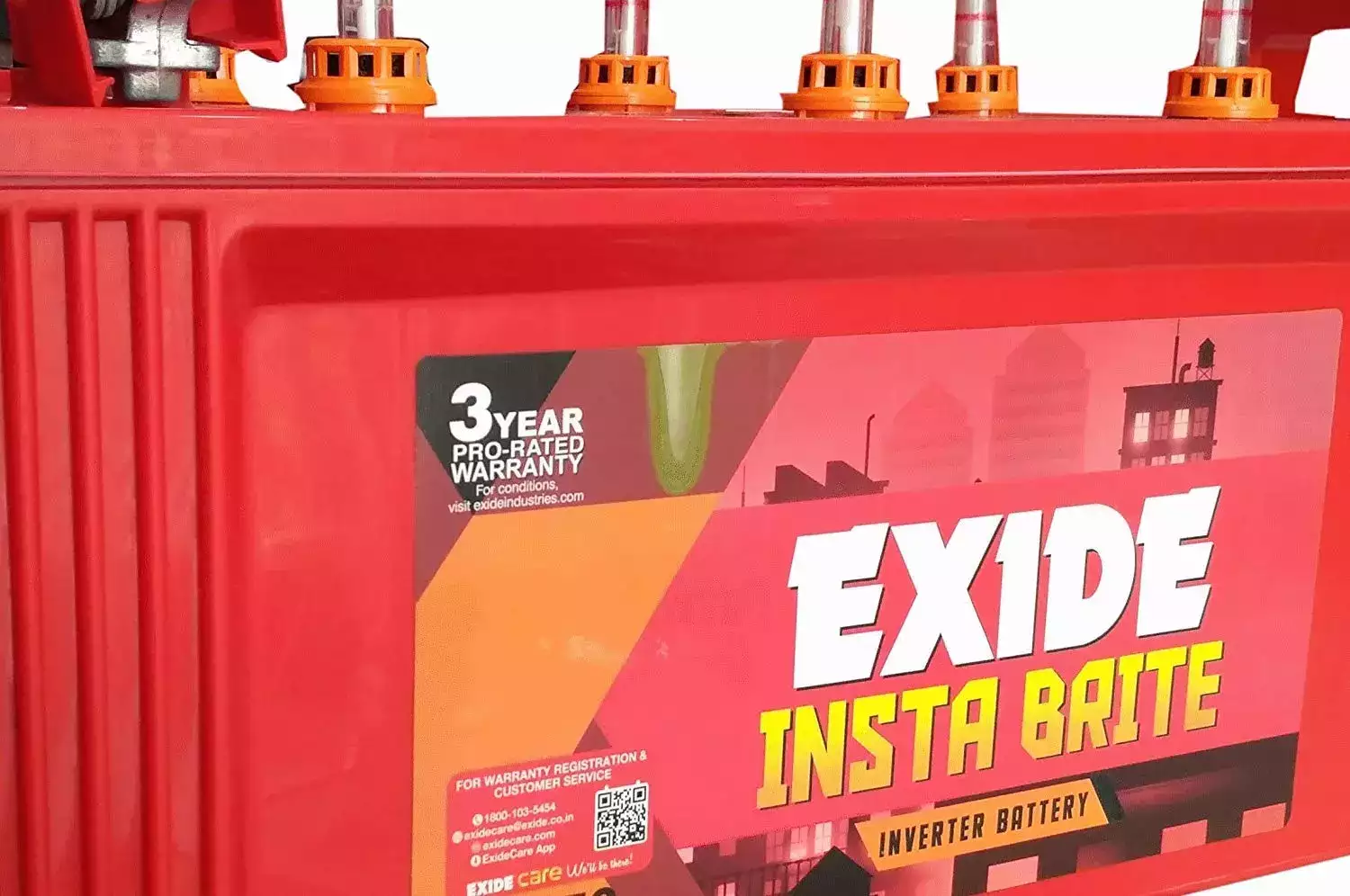
As of August 2026, inverter battery prices in India still span a wide range even among products carrying the same amp-hour label. The practical answer is to calculate the required backup first, then compare batteries with the same capacity, discharge rating, construction and warranty terms.
Current manufacturer data shows why a single “150Ah price” is misleading. In the Exide price list effective July 1, 2026, 150Ah tall-tubular models run from ₹17,666 to ₹29,657 at maximum recommended consumer prices, including GST; their listed warranty structures range from 18 months plus an extendable period to 72 months. Those are materially different products, not interchangeable batteries with arbitrary markups.
What a realistic inverter battery price looks like
Retail prices can be lower than manufacturer MRPs because of dealer discounts and old-battery exchange. A Delhi NCR dealer’s June 2026 market guide places mainstream tubular 150Ah batteries at roughly ₹14,000–₹20,000 after exchange and 200Ah batteries at approximately ₹18,000–₹26,000. These are regional, indicative bands rather than national fixed prices.
Before comparing quotations, establish whether each number is the gross selling price or the amount payable after surrendering an old battery. Also check whether installation, a trolley, cables and delivery are included. A seemingly cheaper bundle can become more expensive once those items are added, while an unusually generous exchange allowance may simply disguise a higher starting price.
MRP is a ceiling, not a prediction of the final transaction. Availability, local dealer margins, stock age and exchange value can change what a household actually pays. Record every component separately so that two quotes can be compared on the same basis.
Calculate the load before choosing amp-hours
The inverter and battery solve different parts of the problem. The inverter must handle the combined wattage of appliances operating at the same time, including a margin for starting surges. Battery capacity determines how long that supported load can continue during an outage.
Make a list of essential appliances rather than everything connected to the house. Add their wattages, then decide which devices genuinely need to run together. Fans, lights, a router and a television create a very different requirement from a refrigerator, water pump, microwave or air conditioner.
A useful planning estimate for a 12V lead-acid system is:
Backup hours ≈ battery voltage × amp-hours × inverter efficiency × usable battery fraction ÷ load in watts.
For a clearly labelled conditional example, a 12V, 150Ah battery supplying a steady 200W load, with assumed inverter efficiency and usable capacity of 80% each, gives about 5.8 hours: 12 × 150 × 0.8 × 0.8 ÷ 200. This is a sizing estimate, not a performance guarantee. Battery age, temperature, appliance surges, cable losses, charging condition and the manufacturer’s discharge-rate specification can all reduce actual runtime.
Do not buy a larger battery without checking the inverter’s supported battery range and charging current. An undersized charger may take too long to restore a high-capacity battery between frequent cuts. Conversely, a small battery repeatedly discharged deeply may provide disappointing backup and require earlier replacement.
Voltage can turn one battery into a two-battery purchase
Check the inverter’s DC voltage before accepting a combo quotation. A 12V inverter normally uses one compatible 12V battery, while a 24V model normally requires two matched 12V batteries connected as the manufacturer specifies. That distinction can nearly double the battery portion of a system quote.
For a concrete current example, the official Luminous Zelio+ 1100 specifications identify a 900VA pure-sine-wave inverter supporting one 12V battery, with a maximum stated bulb load of 756W and a 36-month inverter warranty. Its listed online price of ₹8,599 covers the inverter and manual, not a battery.
This is why an inverter price should never be treated as a complete backup-system price. Confirm the number of batteries, their individual capacity, whether they must be identical, and whether the quoted cabinet or trolley can hold the required bank.
Compare batteries on more than the 150Ah label
Amp-hours are essential, but they do not fully identify the product. Put competing quotations side by side and match the following fields:
- Battery chemistry and construction: flooded flat-plate, short tubular, tall tubular, sealed lead-acid, gel or lithium-based products have different maintenance and compatibility requirements.
- Voltage and capacity: compare 12V with 12V and the same stated Ah capacity.
- Discharge rating: an Ah figure measured at C10 is not directly equivalent to the same number measured at C20 under a slower discharge.
- Warranty split: distinguish full free-replacement months from pro-rata or discount-only coverage.
- Manufacturing date: verify that discounted stock has not spent an excessive period sitting uncharged.
- Included work: installation, suitable cabling, connectors, trolley and removal of the old battery should be itemized.
Construction should follow the outage pattern. A household facing long, frequent cuts has a stronger reason to pay for a battery designed for repeated deep discharge than one experiencing brief, occasional interruptions. The right premium depends on use, not simply on which model has the longest feature list.
Read the warranty as a future price
A headline such as “60-month warranty” does not necessarily mean five years of unconditional free replacement. Many battery warranties divide coverage into a free-replacement period and a later pro-rata period, during which the owner receives only a discount on a replacement battery.
Ask the dealer to write both periods on the invoice and explain how a pro-rata claim is calculated. Confirm whether registration is required, what proof of purchase must be retained, whether onsite service is available locally and which uses can void coverage. A cheaper battery with short free replacement may expose the household to a larger unplanned cost than a higher-priced model with stronger early coverage.
A disciplined way to choose the final quote
- List the appliances that must remain available and total their simultaneous wattage.
- Choose an inverter with adequate continuous output and surge capability for that load.
- Set the required backup duration, then calculate a provisional battery capacity using conservative efficiency and usable-capacity assumptions.
- Confirm the inverter’s DC voltage, supported battery types and charging current.
- Request quotes for the same battery construction, Ah rating, discharge rate and warranty split.
- Separate the inverter, each battery, installation, cables, trolley, delivery and exchange allowance.
- Verify the manufacturing date, authorized seller status and local warranty process before payment.
The lowest inverter battery price is useful only after these checks produce equivalent systems. Capacity determines likely runtime, voltage determines how many batteries are needed, and warranty terms determine how much financial protection remains after purchase. Once those variables match, the cheaper complete quote becomes a meaningful saving rather than a compromise hidden behind one large Ah number.
Also read:
Subscribe to our newsletter
Get the latest Web3, AI, and crypto news delivered straight to your inbox.