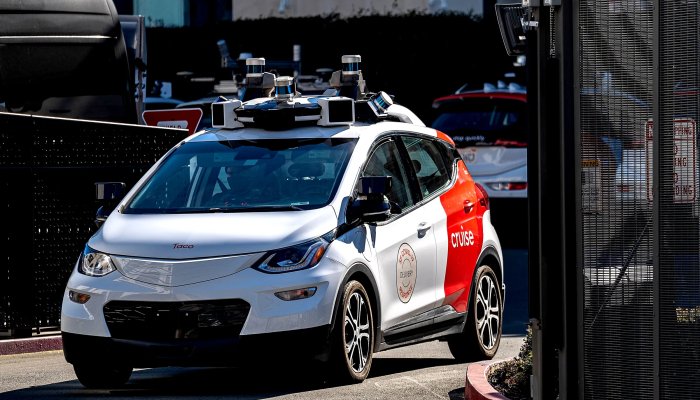
Chinese Company Approved to Test Robotaxis in California
|Creator Economy| 1529

Waymo received permission to expand driverless testing and deployment into additional parts of Northern and Southern California in November 2025. But the California DMV’s current Waymo record describes an approved operating domain, not a statewide service launch: it lists eligible cities and counties, permitted conditions and vehicle platforms without promising that passengers can book rides everywhere on the map.
That distinction remains decisive in August 2026. The CPUC’s advice-letter status page says Waymo’s January 28 filing for an updated passenger-safety plan covering the expanded territory and Ojai vehicle is suspended for further review through September 25, 2026; the commission also stresses that this suspension does not cancel Waymo’s existing operating authority.
The DMV expansion is substantial. Its approved domain now names communities in the Bay Area, Sacramento region, Los Angeles County, Orange County, Riverside County, San Bernardino County, San Diego County and several adjoining counties. The authorization covers operation at all times of day, at all speeds and in listed conditions including rain and fog.
Those terms establish where and under what conditions Waymo may deploy an approved autonomous system. They remove one regulatory obstacle to future expansion, but they do not place a working fleet in every listed municipality, establish pickup coverage on every road or guarantee that a route will appear in the Waymo app.
California also divides authority between agencies. The DMV regulates autonomous-vehicle testing and deployment on public roads, while the CPUC oversees passenger-service authority. Waymo must then complete its own mapping, validation, fleet positioning, charging, maintenance and local launch work before a permitted location becomes useful to an ordinary rider.
San Diego is the clearest current example. Waymo’s July 8 operating update said fully autonomous rides there would begin with employees and that public access was expected later. That is a staged rollout, not an already open, unrestricted commercial network.
The same distinction applies elsewhere on the expanded map. A city appearing in the DMV table may be legally eligible for driverless deployment while still lacking public bookings, sufficient vehicles or practical connections to another service area. “Approved,” “testing,” “employee-only,” “limited public access” and “open to anyone” describe different stages and should not be treated as synonyms.
Waymo already provides public passenger service in established California markets, notably the San Francisco Bay Area and Los Angeles. Those real operations demonstrate that robotaxis have moved beyond laboratory trials, but their existence does not turn every newly authorized community into part of one continuous passenger network.
The broad permit map makes a long intercity journey appear plausible on paper. Yet none of the current official records cited here announces a publicly bookable, one-vehicle trip between San Francisco and San Diego, publishes a fare for it or promises uninterrupted passenger coverage along that route.
That missing product detail matters. A robotaxi can be authorized to traverse certain roads without the operator offering an origin, destination or through-route to customers. Fleet range, charging, vehicle recovery, demand distribution and the ability to keep cars balanced between distant markets would also shape any intercity service.
Claims about a specific fare for such a trip therefore require an actual Waymo price quote or launch announcement. Until one exists, comparisons with airfare, rental cars or human-driven ride-hailing rely on hypothetical prices rather than a service consumers can buy.
Waymo’s larger footprint can make car-free living easier for some households, especially when dependable service covers frequent local destinations. It can also help a two-car household consider whether the second vehicle still earns its insurance, parking and maintenance costs. Those are credible possibilities, not evidence that personal car ownership across California has entered an irreversible decline.
A permit does not measure how households respond. Neither the DMV authorization nor the pending CPUC filing supplies a verified percentage of Californians planning to sell a vehicle, an annual household saving attributable to Waymo or a forecast showing robotaxis replacing private cars by a particular year.
For substitution to become convincing, the live service—not merely the authorized territory—would need to satisfy several practical tests:
The result will differ sharply by household. A city resident with parking fees, short trips and good transit has a different calculation from a suburban family whose journeys extend beyond the service area. Statewide registration trends also cannot be inferred from adoption among riders in a handful of metropolitan zones.
The useful map is the service boundary displayed when a rider requests an actual trip, not the much larger regulatory domain. Before selling a vehicle, a household can record several weeks of journeys and check whether Waymo or another dependable mode covers each origin, destination and time of day.
The cost comparison should include only expenses that disappear with the car: a sale may remove depreciation, registration, insurance, parking and maintenance, while merely driving less may leave most of them intact. Robotaxi fares, transit, rentals and occasional human-driven rides then belong on the replacement side of the calculation.
Waymo’s November 2025 authorization was a meaningful foundation for expansion, and the 2026 San Diego rollout shows the company acting on it. The verified status is narrower than the dramatic version, however: California has approved a large potential operating domain, while the passenger network is still being opened market by market. That can change individual ownership decisions without proving that the private car’s statewide decline is inevitable.
Also read:


Get the latest Web3, AI, and crypto news delivered straight to your inbox.