
NASA Nearly Chose Boeing Alone—Starliner Still Isn’t Certified
|For newbies| 2450
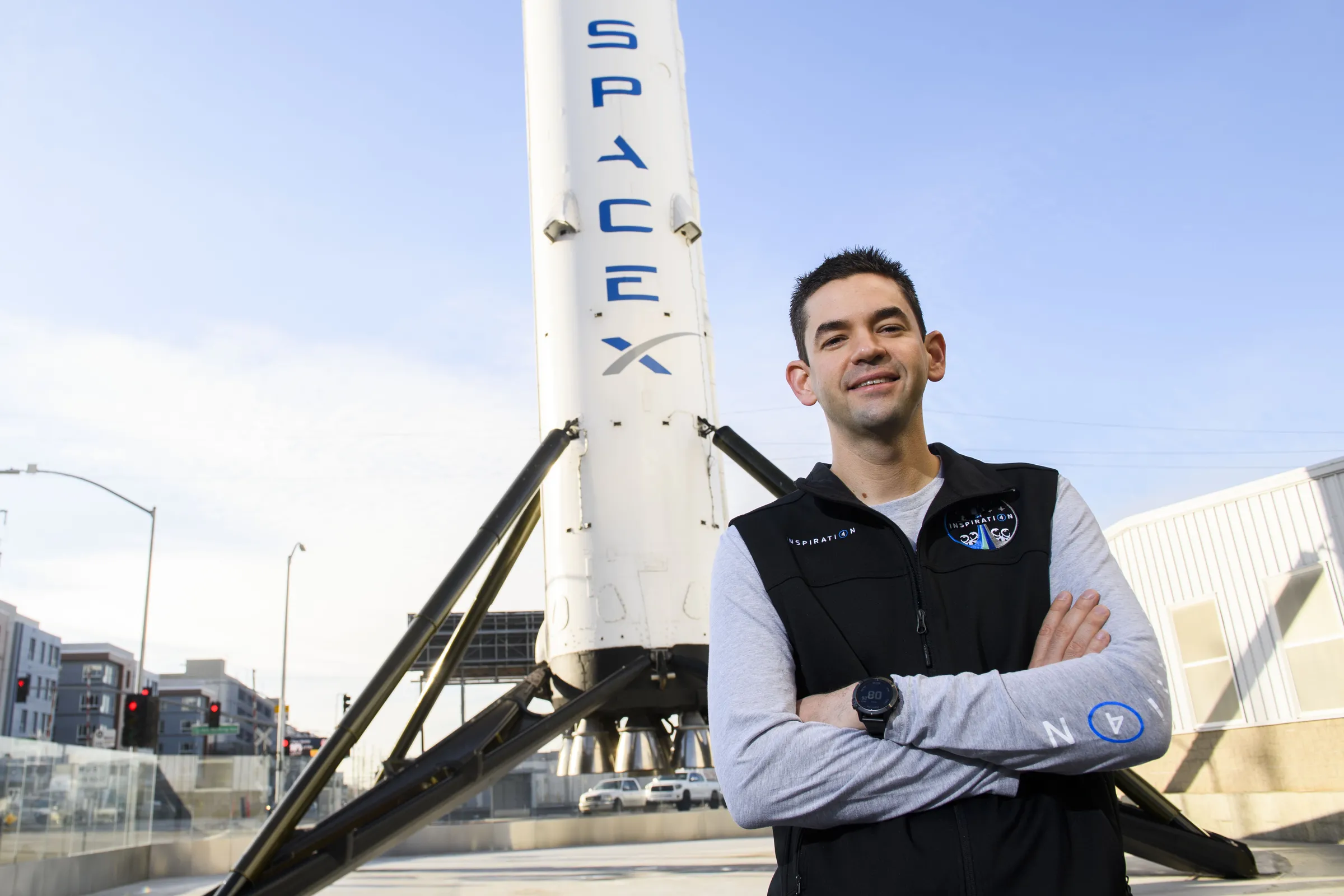
Jared Isaacman is no longer merely Donald Trump’s choice to head NASA. NASA’s current leadership biography identifies him as the agency’s 15th administrator, records his Senate confirmation on December 17, 2025, and describes a résumé spanning Shift4, military aviation services and two commercial human-spaceflight missions.
The route to that office was anything but direct. Trump initially selected Isaacman in 2024, withdrew the nomination in May 2025 and nominated him again in November; the Associated Press account of the reversal reports that the Senate ultimately confirmed him in a bipartisan 67–30 vote. The important update is therefore not simply that Trump named a wealthy private astronaut: Isaacman survived a withdrawn nomination and acquired the legal authority to run NASA.
Trump’s first selection was a statement of intent, not a completed appointment. The NASA administrator is a presidential nominee who must receive Senate confirmation, so describing Isaacman as already “heading” the agency at that stage skipped the most important institutional step.
That distinction became decisive when Trump withdrew the first nomination before the Senate could complete the process. Isaacman had appeared before the Senate Commerce, Science and Transportation Committee, but a hearing and favorable political momentum did not give him control of NASA. The withdrawal ended that nomination and left the agency under acting leadership while the White House reconsidered its choice.
Trump later started the process again. The second nomination was received by the Senate on November 6, 2025, referred to the same committee, considered at a new hearing in December and sent to the full chamber. The official congressional nomination record shows that senators confirmed Isaacman on December 17 by 67 votes to 30, turning the renewed presidential choice into an appointment.
The withdrawal and renomination were not ceremonial detours. They created two legally separate attempts to install the same person and extended a leadership transition at an agency responsible for major civil-space, science and aeronautics programs. For readers encountering the original announcement later, the sequence explains why “Trump’s pick” and “NASA administrator” refer to different stages of the story.
The episode also exposed how closely a technical agency’s leadership can depend on White House politics. AP linked the May withdrawal to the deterioration of Trump’s relationship with Elon Musk, a friend and business associate of Isaacman whose SpaceX is deeply involved in American spaceflight. When questioned during his second confirmation process, Isaacman declined to speculate about Trump’s decisions and said he would operate without conflicts of interest.
That answer did not erase the underlying oversight issue. NASA buys launch, spacecraft and other services from commercial providers, while Isaacman reached orbit through missions operated with SpaceX hardware. The relevant question is not whether experience with a contractor automatically disqualifies an administrator; it is how procurement, ethics and recusal rules are applied when decisions affect companies connected to the administrator’s prior activities.
Isaacman’s path to NASA leadership differs from that of a career civil servant or a scientist promoted through the agency. He founded the payments business that became Shift4 and co-founded Draken International, an aviation company serving military-training needs. He later commanded Inspiration4 in 2021 and Polaris Dawn in 2024, both private orbital missions.
Polaris Dawn placed him in the first commercial spacewalk, giving him direct experience with crewed-spaceflight operations, risk and privately financed mission planning. That experience is relevant to a NASA increasingly dependent on commercial launch and spacecraft services. It does not, by itself, answer how he will balance human exploration with Earth science, astrophysics, planetary research, aeronautics, safety and the agency’s institutional workforce.
The central contrast is now real rather than hypothetical: a customer and participant in commercial spaceflight has become the government official responsible for NASA’s overall direction. His job extends far beyond promoting private missions. The administrator must translate presidential policy into executable programs, defend priorities before Congress and oversee relationships with multiple contractors rather than favoring a single commercial model.
Before confirmation, Isaacman could outline a vision but could not issue agencywide decisions as administrator. Confirmation shifted him from outside advocate to accountable public official. His performance can now be judged through budgets, program decisions, organizational changes, congressional testimony and the treatment of science and engineering work across NASA.
The change also makes his public-private philosophy consequential. Faster contracting or greater use of commercial systems can potentially reduce development burdens, but NASA still retains responsibility for mission assurance, competition, public spending and objectives that lack an immediate private market. An administrator with commercial experience must therefore demonstrate not only speed but stewardship.
Isaacman’s appointment should not be summarized as Trump simply handing NASA to a billionaire space tourist. The accurate current account is more specific: Trump selected an entrepreneur and private astronaut, withdrew that choice, submitted him again and secured Senate confirmation on the second attempt. Isaacman now runs NASA, while the political reversal, contractor relationships and breadth of the agency’s mandate define the scrutiny that comes with the office.
Also read:


Get the latest Web3, AI, and crypto news delivered straight to your inbox.