
Cell-Sized Microrobots Cross Obstacles—but Only in Lab Chambers
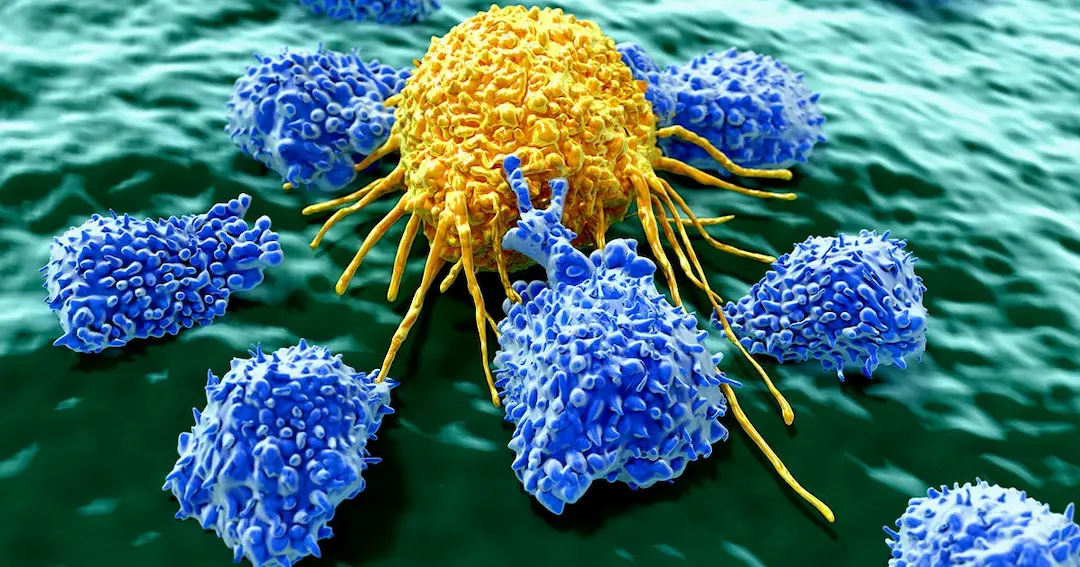
Tel Aviv University researchers have extended their cell-sized microrobot platform beyond the cell-capture demonstration reported in 2023. In a peer-reviewed 2026 study, 10- and 27-micrometre Janus particles navigated between a microchamber’s lower and upper surfaces, crossed raised barriers and transported synthetic or living biological cargo; the Nature Communications experiments still took place in controlled chambers, not inside animals or patients.
The central claim therefore remains narrower than the idea of tiny doctors roaming through the body. These are externally actuated laboratory particles that can sense or manipulate microscopic cargo under specified conditions, while cameras, field generators and control software remain outside the robot. The meaningful update is better navigation and automated control—not a clinical release or proof of safe operation in humans.
What the original cell experiment actually demonstrated
The 2023 device was a roughly 10-micrometre Janus particle: an asymmetric sphere whose two sides have different material properties. According to Tel Aviv University’s account of the original research, electric and magnetic mechanisms guided the particle through biological samples, where it captured individual blood cells, cancer cells and a bacterium. The team also demonstrated discrimination among cells with different viability states and explicitly described the work as an in-vitro assay.
Calling that process an “inspection” is convenient, but it can suggest more intelligence than the particle contains. The system inferred a target’s condition from its electrical response rather than examining a cell with an onboard microscope, sequencing its genome or independently diagnosing disease. Its label-free operation meant the selected cells did not first need fluorescent markers; it did not mean that the robot could recognize every cell type or medical condition without calibration.
The hybrid drive addressed a genuine engineering constraint. Electric propulsion provides useful cargo interactions, but its effectiveness can fall as a liquid’s conductivity rises; magnetic actuation remains available under conditions where electric movement becomes weak. Combining the two gave researchers separate ways to move the particle and interact with nearby biological material.
The 2026 advance is mobility, not a medical deployment
The newer system tackles a limitation common to surface-bound microrobots: a particle that moves well across a flat substrate may be stopped by a wall, step or disconnected work area. The researchers combined magnetic rolling and lifting with electrically controlled alignment, propulsion and trapping. Optical tracking and path-planning software supplied closed-loop control, allowing a particle to follow programmed routes and switch between chamber surfaces.
That change matters for lab-on-a-chip work. A microrobot able to rise to a chamber ceiling, travel laterally and descend onto another level can reach cargo that a purely planar device cannot. The study demonstrated barrier crossing, placement of particles at selected locations and “pick-and-place” transport between separated compartments, including experiments with living bacteria.
However, the 2026 paper did not reproduce every function of the earlier cell-sorting experiment in a realistic human tissue environment. Its baseline chamber tests used dilute, low-conductivity solution between closely spaced glass slides. The result should be read as a more capable motion-and-handling platform, not evidence that the original robot now navigates blood vessels, identifies diseased cells inside a person or delivers an approved medicine.
Why the laboratory boundary is difficult to cross
Operating inside a body would combine problems that are largely separable on a microscope stage. Researchers would need to track a tiny moving object through opaque tissue, deliver suitable magnetic or other control fields, maintain useful motion in complex fluids, prevent unintended interactions, retrieve or safely degrade the device, and show that its materials and payload do not create unacceptable toxicity or immune effects.
Manufacturing is another constraint. A clinical system would require reproducible particles, validated control equipment and quality assurance at a scale far beyond a small experimental batch. A 2025 ACS Nano technology roadmap identifies tracking, environmentally compatible propulsion, scalable production, precision, quality control and regulatory compliance among the field’s unresolved questions for the coming decade.
Those requirements also explain why success in a liquid chamber cannot be translated directly into a treatment claim. A robot may carry a bacterium across a fabricated obstacle while still lacking the imaging, safety, targeting and manufacturing evidence needed for an animal study, much less a clinical trial. Each is a distinct development stage with different measurements and failure modes.
What these microrobots could realistically be used for first
The nearer-term opportunity is controlled microscopic handling outside the body. In a microfluidic device, a mobile particle could collect selected cells or organisms, move them between test regions, bring reagents into contact with a target, or position material where a stationary instrument can analyze it. Better obstacle crossing expands the layouts such a system might use.
Single-cell research is especially relevant because conventional bulk measurements average signals across many cells. Recovering one selected cell for external analysis can preserve differences that would otherwise disappear in that average. The microrobot does not replace sequencing, microscopy or biochemical assays; it can act as a movable interface that selects and transports the specimen those instruments examine.
Targeted drug delivery remains a research direction rather than a demonstrated benefit of this particular 2026 configuration. The platform’s cargo control and multi-surface movement supply useful building blocks, but an in-body carrier would also need a medically appropriate payload, release mechanism, tracking method, route of administration and safety evidence. Until those pieces are tested together in relevant biological models, the strongest supported description is a programmable laboratory micromanipulator.
The practical takeaway
The story has advanced since 2023, but along an engineering path rather than a clinical one. The original work showed label-free interaction with individual cells in biological samples; the later work made related Janus-particle microrobots more controllable in structured, three-dimensional chamber environments.
That is a substantive improvement: microscopic cargo can be reached across obstacles and moved between surfaces under automated feedback. It is also a reminder to keep the scale of the claim aligned with the scale of the experiment. These robots can already perform sophisticated tasks under a microscope, while inspecting or manipulating a patient’s cells from inside the body remains a future objective.
Also read:
Subscribe to our newsletter
Get the latest Web3, AI, and crypto news delivered straight to your inbox.