Helene’s Fake Flood Image Shows Why a Facebook Label Is Not a Takedown
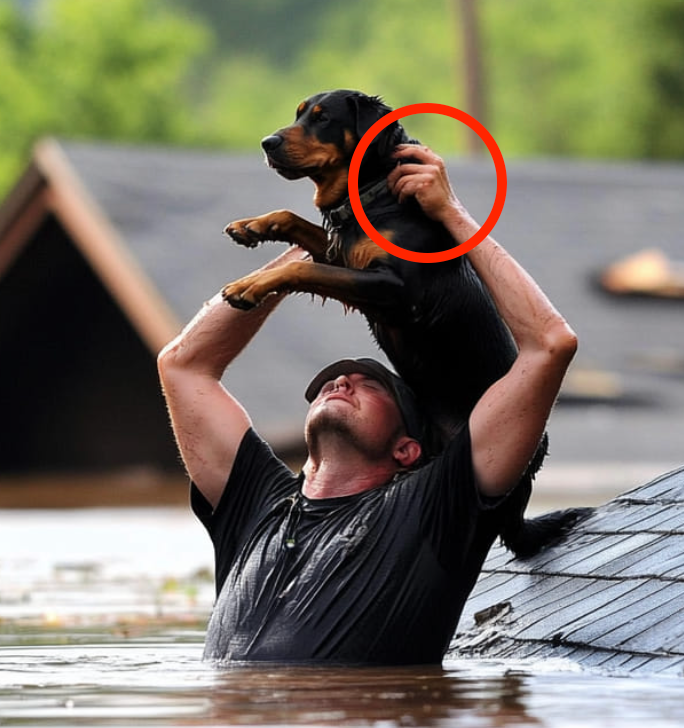
The synthetic Hurricane Helene images documented on Facebook belong to the storm’s 2024 aftermath, not a newly confirmed surge in 2026. What remains relevant is the platform problem they exposed: the current policy treats an AI notice as context for viewers, not as automatic grounds for removing an otherwise policy-compliant post.
That distinction leaves a consequential gap. A convincing disaster picture can circulate before anyone establishes its location, date or origin, and a label about how an image was made does not validate the claim attached to it.
A fabricated flood placed Gatlinburg inside the disaster zone
On September 30, 2024, a Facebook post described an image of a flooded street as “Gatlinburg, Tennessee today.” Cars appeared submerged and branches floated in the water, but PolitiFact’s examination of the Facebook post found that Gatlinburg had not flooded, that city officials identified the image as artificial and that the post was flagged through Meta’s misinformation system.
The falsehood did not require an elaborate narrative. A place name, an immediate time reference and a visually plausible flood scene were enough to present an invented event as local documentation. Sharing through a familiar social network could then supply credibility that the image itself had not earned.
Visible generation errors are therefore an incomplete defense. Distorted hands, inconsistent reflections or unreadable signs can expose some synthetic pictures, but the decisive problem in the Gatlinburg example was geographic and factual: the event shown had not occurred in the named city. A technically flawless image carrying the same false caption would still be misinformation.
Helene imagery entered an established attention economy
Generated disaster pictures did not appear in an empty ecosystem. A study by Renee DiResta and Josh A. Goldstein documented Facebook pages using AI-generated images to build audiences, promote businesses outside the platform and direct users toward scams; it also found instances in which Facebook recommended unlabeled generated images to people who did not follow the pages posting them.
The research does not establish the motive behind every image associated with Helene. It does demonstrate a repeatable publishing model: inexpensive images can attract reactions, followers and traffic, while emotionally direct subjects reduce the need for detailed storytelling. A natural disaster supplies urgency, recognizable scenes and an audience actively looking for updates.
The incentive is broader than immediate fraud. A post does not need to request money to have commercial value. Engagement can expand an account’s audience, increase its usefulness for later promotions or send visitors to an external store or website. Focusing only on suspicious donation links therefore misses part of the creator-economy logic behind synthetic crisis content.
This model also helps explain why disaster imagery is especially difficult to moderate through visual inspection alone. Flooded roads, damaged homes and animal rescues are plausible consequences of a real hurricane. The misleading element may sit entirely in the caption, which can assign a generated scene to a real place at a real moment.
Meta’s AI notice is a disclosure mechanism, not verification
Meta’s published labeling policy says “AI info” notices may be applied when systems detect industry-standard signals or when an uploader discloses AI use. The policy keeps such content available with labels and context unless it violates another rule; material rated false or altered by fact-checkers may be placed lower in Feed and receive an additional notice.
This approach can reveal something about production, but it cannot establish whether a depicted town flooded, whether the scene belongs to the stated date or whether the uploader witnessed the event. Detection also relies partly on technical indicators and disclosure, so the absence of an AI notice is not evidence that an image is authentic.
The reverse is equally important: the presence of a notice does not prove that the caption is false. A generated illustration may be accurately labeled and honestly presented, while an authentic photograph may be paired with the wrong location or date. Provenance, disclosure and factual accuracy are related questions, but they are not interchangeable.
The caption can be more deceptive than the pixels
The Gatlinburg example shows why concentrating on visual artifacts can produce false confidence. The crucial checks concern the claim surrounding the image: who first published it, what location and time it asserts, and whether accountable reporting from that place supports the depicted event. Confirmation that Hurricane Helene caused severe regional flooding would not authenticate every picture assigned to a particular Tennessee or North Carolina community.
Account history provides additional context without settling authenticity on its own. An abrupt change of subject, repetitive emotional captions or unrelated commercial links may reveal an engagement strategy, but none independently proves that a specific image was generated. Conversely, a consistent local-news theme does not make an unattributed picture reliable.
For creators and page operators, an AI disclosure cannot repair a caption that gives an illustration false eyewitness status. If a synthetic scene is used to represent a real disaster, the presentation must distinguish illustration from documentation and avoid attaching an unsupported place, date or event to the image.
What the Helene case still establishes
The documented record supports a narrower conclusion than the claim that Facebook is currently being flooded with Helene images. At least one fabricated flood scene circulated on Facebook during the 2024 disaster, and independent research had already identified audience growth and off-platform promotion as incentives for publishing generated images at scale.
The current policy makes the platform notice mechanics clearer, but it does not close the evidentiary gap. Labels can disclose likely AI involvement and fact-checking systems can reduce distribution, yet neither function automatically establishes provenance, verifies a caption or removes every synthetic post. The standard that matters for crisis content remains whether the specific scene can be connected to accountable reporting from the place and time claimed.
Also read:
Subscribe to our newsletter
Get the latest Web3, AI, and crypto news delivered straight to your inbox.