
Has Elon Musk Made an Irreversible Blunder with Tesla’s Full Self-Driving?
|Creator Economy| 1794
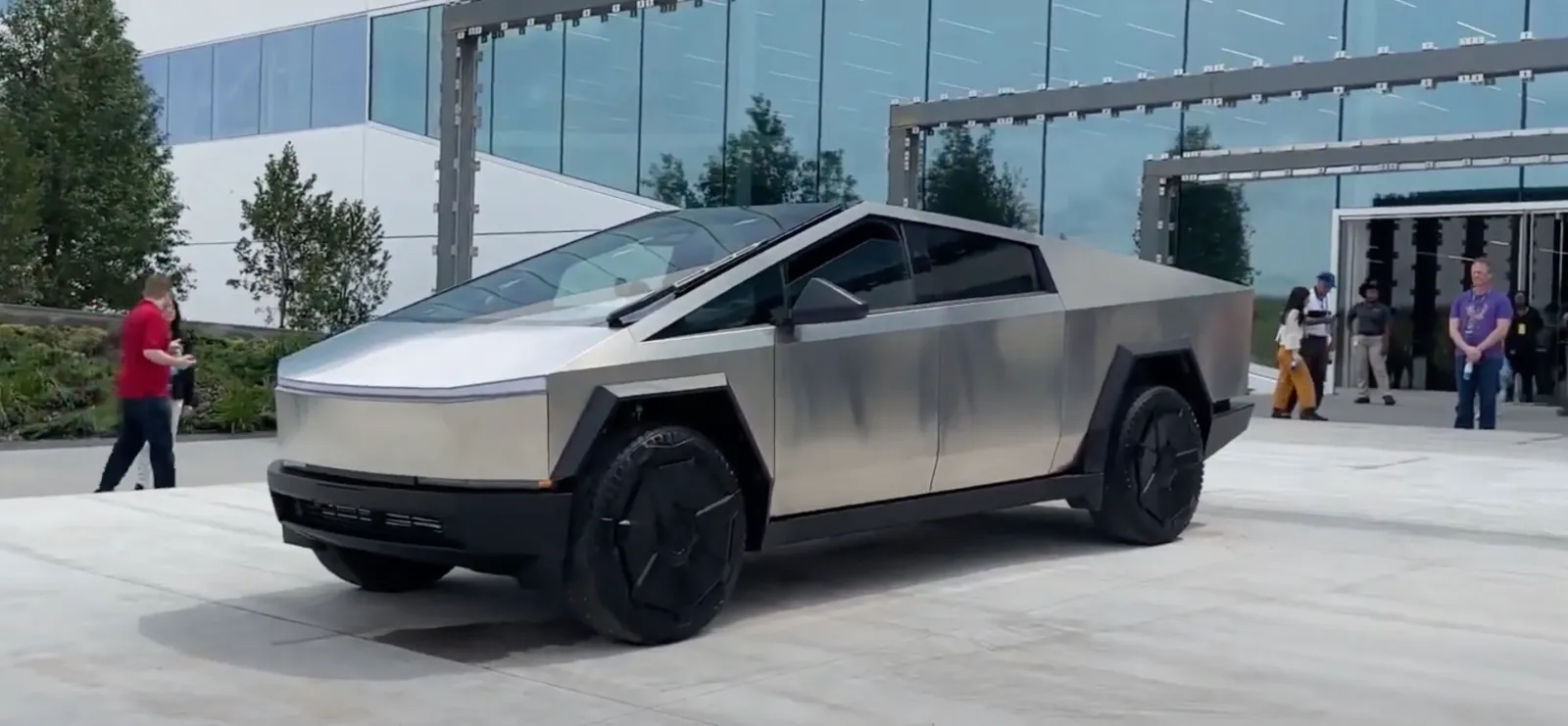
Tesla now documents Full Self-Driving (Supervised) as a Cybertruck feature, although access and behavior can vary with region, hardware, configuration and software. The name still does not describe an autonomous vehicle: Tesla’s current Cybertruck manual requires an attentive driver who can take control immediately.
That distinction is the lasting significance of a video published on September 30, 2024. During an early Cybertruck FSD drive from Beverly Hills toward Santa Monica, the pickup made a left turn onto Sunset Boulevard and headed toward a median until the person behind the wheel intervened, as documented in TechCrunch’s contemporaneous account.
The recording captured a failed path choice followed by a successful human correction. It demonstrated that the software could complete other portions of an urban journey while still producing a maneuver serious enough to require direct steering input at an ordinary left turn.
The clip did not establish why the system chose that trajectory. Public footage cannot reveal the vehicle’s internal confidence, its interpretation of the curb, the precise map data it used or whether a later software build would behave identically at the same location. It also did not record a collision, so descriptions of an actual crash or confirmed damage would overstate the evidence.
Those boundaries matter because a single creator-shot drive is an observation, not a controlled safety study. It can prove that the recorded intervention happened under the visible conditions; it cannot supply a failure rate, compare versions fairly or show how frequently other Cybertrucks encounter the same problem.
The current product status is more mature than the limited rollout shown in 2024. Tesla’s documentation now describes FSD (Supervised) navigating curves, intersections, roundabouts and highway entrances and exits in Cybertruck, with cameras around the vehicle supplying environmental information to its onboard computer.
Yet the operating boundary has not disappeared. Tesla warns that intervention may be necessary on narrow roads, in construction areas and at complex intersections. Its manual also tells drivers not to predict whether the system will stop or proceed at an intersection because its behavior can appear inconsistent.
For an owner, the practical rule is therefore simple: route completion is not permission to disengage from driving. The person in the seat remains responsible for watching road markings, curbs, signals, pedestrians and surrounding traffic, even when the vehicle is steering and selecting its own turns.
The software provides several ways to cancel assisted driving, including braking, pressing the steering-wheel control or steering manually. The Sunset Boulevard intervention was not an unusual workaround; taking over is an expected part of the supervised operating model whenever the vehicle’s intended path looks unsafe or uncertain.
The median incident was anecdotal, but subsequent regulatory attention shows why it should not be dismissed merely because a driver prevented contact. On October 7, 2025, the National Highway Traffic Safety Administration opened a preliminary evaluation covering Tesla vehicles equipped with FSD (Supervised) or the earlier FSD (Beta), examining alleged traffic-law violations such as entering against red signals and traveling in the wrong direction.
NHTSA’s official opening record listed an estimated population of 2,882,566 vehicles and 58 reported incidents, including 14 categorized as crashes or fires and 23 reported injuries. Those totals concern the covered Tesla population, not Cybertruck alone, and the document does not connect the Sunset Boulevard video to any listed crash or injury.
The agency framed the central question more narrowly than a judgment on whether FSD is generally good or bad. It said it would assess the scope, frequency and potential safety consequences of maneuvers that violate traffic rules, including whether unexpected system inputs can make timely driver supervision harder.
Opening an evaluation is not a finding that every allegation is proven, nor does it assign the aggregate figures to one model or software release. It does, however, reinforce the relevant lesson from the 2024 clip: a human may remain legally and operationally responsible even when the software initiates the questionable maneuver.
Videos from owners and technology creators can expose behavior that a feature list cannot communicate. A visible steering correction, brake application or disengagement gives viewers concrete information about where supervision was needed on that particular drive.
The most useful clips preserve enough context to evaluate the event: the software version, vehicle model, date, route, weather, road markings and the moment control changed hands. Continuous footage is more informative than a short extract because it shows whether the vehicle received a clear lane, whether another road user affected the maneuver and how quickly the driver responded.
Commentary should also distinguish three different outcomes: the driver intervened as a precaution, the system issued a takeover request, or contact occurred. Treating all three as crashes exaggerates the record; treating every prevented error as irrelevant ignores the driver’s role in producing a safe outcome.
The Sunset Boulevard footage remains useful precisely when read within those limits. It is not evidence that every current Cybertruck will repeat the turn, but it is direct evidence that an early FSD build required human correction in a recognizable urban situation.
Cybertruck’s assisted-driving software has advanced from a limited 2024 release to a feature described in the model’s current manual. What has not changed is its supervised classification: the vehicle can select a route and operate the controls, but the driver must judge whether the resulting movement is safe.
The median approach should therefore be remembered neither as a new incident nor as proof of a collision. It is a documented takeover from September 2024—and a concise demonstration of why “Full Self-Driving” must still be read together with the word “Supervised.”
Also read:


Get the latest Web3, AI, and crypto news delivered straight to your inbox.