
Understanding Tax Deductions in Small Steps
|Finance| 2789
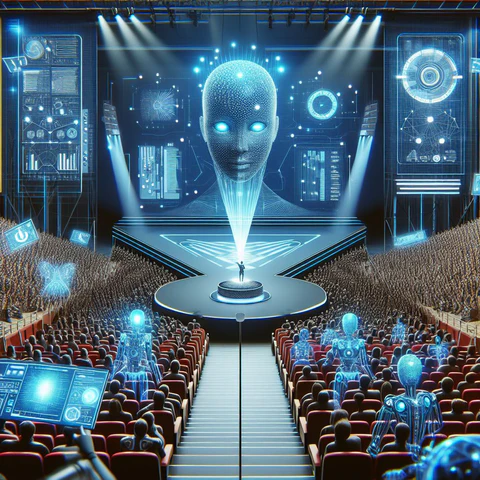
John Mulaney’s Dreamforce roast was a historical event, not a 2026 development. A contemporaneous account from Moscone Center places his closing set on September 19, 2024, and describes a 45-minute performance aimed at Salesforce, AI enthusiasm and the conference audience. The most enduring line told attendees that many of them felt “imminently replaceable.”
There is now a later coda to the story. During a November 2025 return to San Francisco, Mulaney recalled that the Dreamforce appearance “went so bad” and joked that being paid before taking the stage had enabled his approach, according to SFGATE’s account of the later show. That recollection does not change what happened, but it confirms that Mulaney himself remembered the corporate booking as an unusually antagonistic performance.
Dreamforce was presenting automation as the central business story of the conference. Salesforce’s official Dreamforce 2024 recap projected more than 45,000 in-person attendees from over 140 countries and introduced Agentforce as a suite of autonomous agents for work in service, sales, marketing and commerce.
That context made the comedian’s premise unusually direct. The host was promoting software designed to analyze information, make decisions and perform workplace tasks; Mulaney turned the possibility of replacement back on the people gathered to sell, explain and purchase it. His jokes about fleece vests, bars and conference habits emphasized the gap between human workplace culture and the abstract language used to describe automation.
The set was not a technical evaluation of Agentforce. Mulaney offered no benchmarks, product testing or evidence about how the software performed for customers. His target was the confidence and status language surrounding enterprise AI: broad promises, inflated terminology and the awkward fact that workers were celebrating technology advertised as capable of taking on more of their work.
Mulaney’s material worked because he treated corporate vocabulary as part of the product. Terms such as “solutions,” “insights” and “success” can describe real business functions, but they become comic material when speakers use them without specifying a problem, measurement or accountable result. The routine exposed how easily a technology conference can move from a general benefit to a sweeping claim about the future of work.
He also challenged the event’s collective self-image. Dreamforce calls its community members “Trailblazers,” a label intended to convey leadership and innovation. Mulaney’s point was that applying a distinction to tens of thousands of people weakens its meaning, especially inside a gathering where vendors, executives and customers share incentives to affirm the importance of the technology on display.
His comparison between Dreamforce and playing Wiffle ball poorly with his son sharpened that criticism. In both settings, as the joke framed them, participants praised one another despite uncertain performance. The comparison did not establish that every product at the conference was ineffective; it questioned whether enthusiasm inside a branded event could serve as reliable evidence of quality.
The performance was neither an accidental protest nor a conventional celebrity endorsement. Mulaney accepted a corporate entertainment booking and delivered a set tailored to the host, its products and its audience. Payment gave Salesforce access to his fame and comic authority, but that authority depended on his remaining recognizably skeptical rather than adopting the company’s language.
This is the central creator-economy tension in the episode. Brands hire prominent performers because their voices carry cultural value beyond a company’s own channels. Yet the more tightly a sponsor controls that voice, the less distinctive—and potentially less valuable—the appearance becomes.
Mulaney preserved his persona by making the transaction part of the comedy. He could accept the fee without presenting himself as an AI evangelist, while Salesforce received a memorable closing moment that travelled beyond the conference audience. The resulting attention was built on conflict rather than endorsement: the host supplied the stage, and the performer used it to puncture the host’s preferred narrative.
The audience reaction cannot establish whether Salesforce’s AI products worked, whether particular jobs were at risk or whether every attendee embraced the claims being mocked. A comedy set compresses contradictions for effect; it does not resolve technical or economic questions. Treating the routine as proof that enterprise AI had failed would stretch the evidence beyond what happened onstage.
What it does document is a cultural contradiction. A company promoting autonomous systems as a way to expand organizational capacity still relied on a human performer’s judgment, timing and reputation to create the conference’s most widely discussed moment. The entertainment was valuable precisely because it was not predictable corporate speech.
The later remark that the gig had gone badly adds an important boundary to that interpretation. Mulaney did not retrospectively recast the appearance as a successful endorsement, and the available accounts do not support describing it as one. It remains a paid brand engagement in which the creator retained enough independence to become the sharpest critic in the room.
Also read:



Get the latest Web3, AI, and crypto news delivered straight to your inbox.